How to Plan & Install a ColumbariumCemetery Planning Guide
- Data & Demand Planning
- Site Evaluation
- Crane Logistics
- Foundation Engineering
- Installation
- Long-Term Confidence

6 Steps to Columbarium Planning & Installation
1. Data Planning
1. Data Planning
Learn More2. Site Evaluation
2. Site Evaluation
Learn More3. Crane Logistics
3. Crane Logistics
Learn More4. Design & Artistic Value
4. Design & Artistic Value
Learn More5. Foundation Preparation
5. Foundation Preparation
Learn More6. Installation Process
6. Installation Process
Learn More1. Start with Data
& Phased Planning
Start with Data Collection
- How many cremations occur annually?
- What are your 3–5 year projections?
- How many niches should Phase 1 include?
- What is our budget?
Tip:
Gathering accurate statistics now helps prevent costly mistakes later.
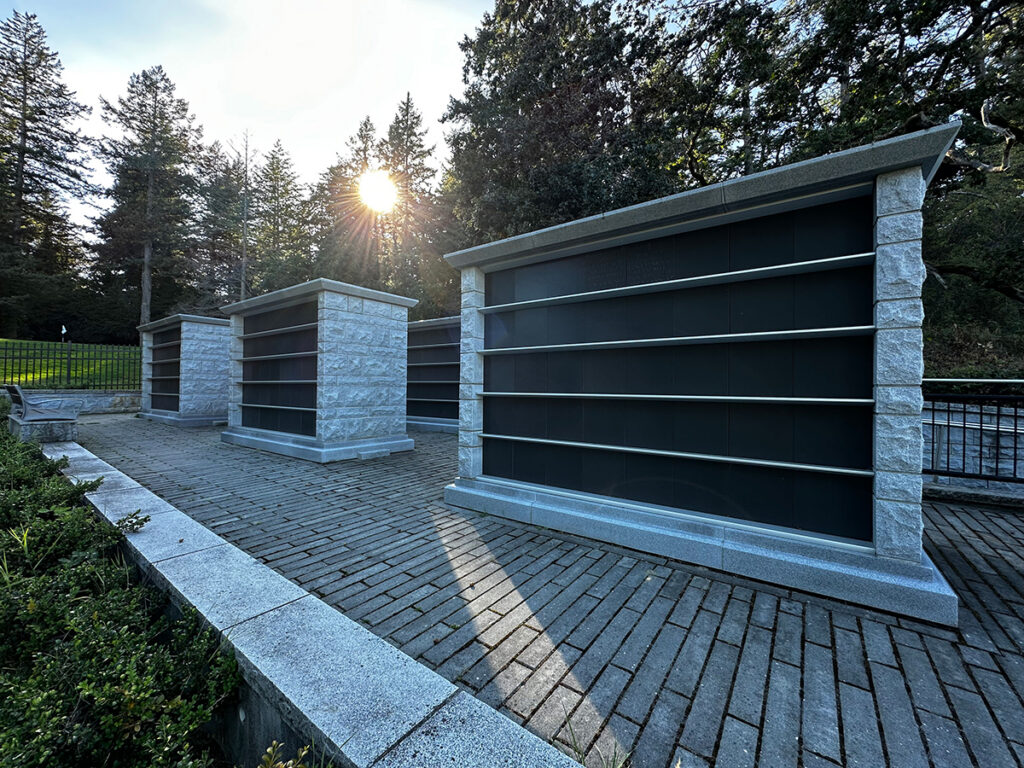
Planning Your Columbarium
Successful cremation niche planning can be achieved by following a few key considerations.
Best Practice:
- Build in Phases: Sell out your columbarium within 3–5 years.
- Columbarium ROI (Return on Investment) Calculator: Choose the right type and number of niches.
- Landscape Architect: Ensure long-term design consistency.
Tip:
Phased columbarium development maximizes Return on Investment and flexibility.

Above photo: is an example of cemetery expansion planning.
Phased planning protects capital and improves long-term return on investment.
2. Understanding Your Site
Site Evaluation
Site Access Is Critical to Cost & Efficiency
Before scheduling installation, it’s important to evaluate whether both the shipping truck and crane can safely access the installation area. Thoughtful columbarium site planning will help you prepare.
Key questions to consider:
- Can the crane park close enough to the foundation and shipping truck’s road to achieve the required reach?
- Is there adequate road width and turning radius for the shipping truck?
- Are there slopes, soft ground, irrigation systems, or underground utilities?
- Are there overhead obstructions such as power lines, trees, or flagpoles?
- Are there gates, walls, or existing structures that limit equipment movement?
- Are there existing graves obstructing access?
Even small obstacles can affect crane size requirements and overall installation cost.
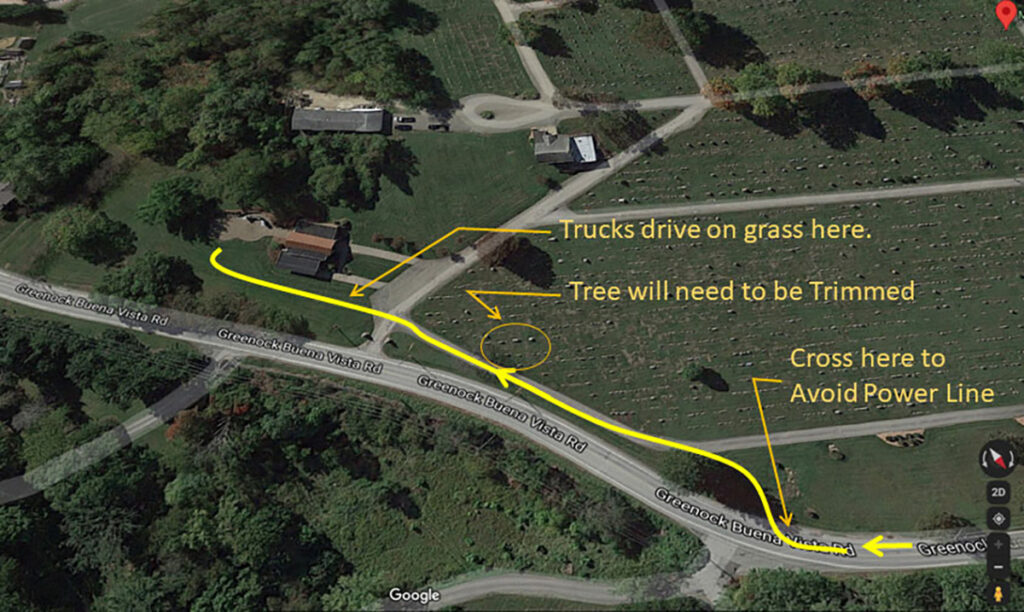
Above photo: is an example of understanding your site layout.
Understanding your site before hand saves on extra costs.
Understanding Crane Size, Reach & Weight
Proper crane selection depends on three critical factors: crane capacity, lifting reach, and columbarium weight.
- Typical Installation: A 40 Ton crane can lift approximately 8,000 lbs at a reach of 10–40 ft.
- Standard Practice: Our initial quotes are generally based on the use of a 40 Ton crane, as this is typically the most cost-effective option.
- Distance Matters: The required crane capacity increases as reach increases.
- Critical Measurement: The true distance must be measured from the center of the crane to the furthest point of the foundation.
- The Shipping Truck: Will need to be positioned close to the crane or within the same distance as the furthest point of the foundation
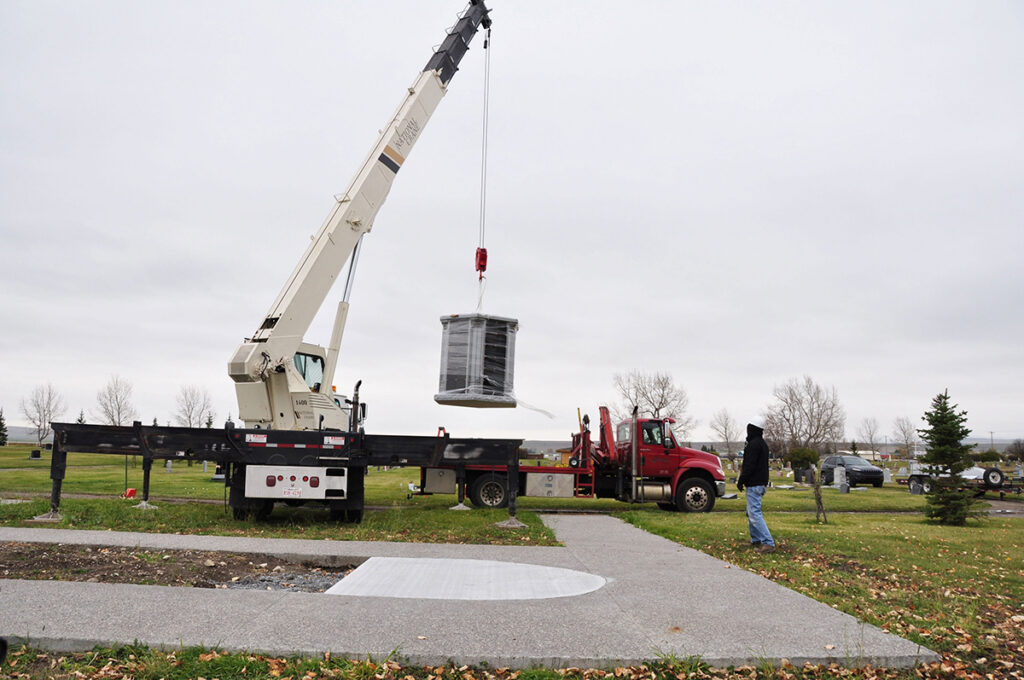
Contract & Planning Considerations
- Signed contracts should clearly define the crane reach and site access conditions.
- Any changes in reach or site conditions after quoting may affect crane requirements.
- Free crane site inspections are available and highly recommended prior to signing a contract to avoid unexpected adjustments.
Special Situations
Larger cranes may be required for:
- Extended reach beyond 40 ft
- Steep slopes or elevation changes
- Oversized or custom columbaria
- Obstructions such as existing graves, landscaping, or structures
Transparency Callout
Crane and installation costs are included in our quotes whenever possible. In rare cases, a crane surcharge may occur if site conditions differ from the original plan. Factors such as power lines, trees, flagpoles, or inaccurate distance measurements can require last-minute adjustments. A thorough site inspection helps prevent unexpected surcharges and ensures a smooth, predictable installation process.

3. Crane Logistics
Crane vs Telehandler Considerations
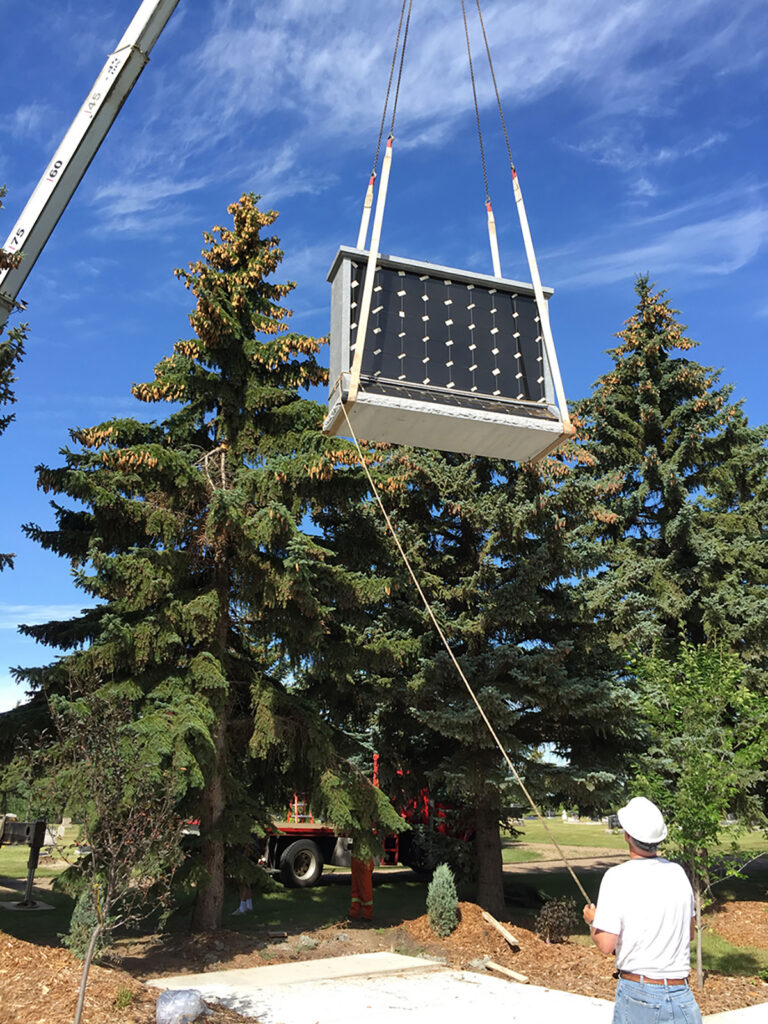
Columbarium Crane Installation
Choosing the Right Equipment
Our experienced Project Management Team makes the final decision on installation equipment after a full site access review. In the meantime, it’s useful to understand when a crane or a telehandler might be the best option for your project.
Proper crane and telehandler selection depends on:
- Columbarium weight
- Required reach distance
- Site access for shipping truck
- Site access for crane or telehandler
A 40 Ton crane typically lifts ~8,000 lbs at 10–40 ft reach and is generally the most cost-effective option included in initial quotes.

ColumbariumTelehandler Installation
Columbarium installation: Critical Measurement
Distance must be measured from the center of the crane’s position to the furthest point of the foundation.
Additionally, the transport truck must be able to position itself at least as close to the crane as the crane’s reach to the foundation.
For example: If the lift to the foundation is 40 feet, we like to get the transport truck to within that distance (perhaps on the opposite side of the crane).
Free crane site inspections are recommended prior to signing contracts to prevent unexpected reach adjustments. In some cases, the sites requiring a custom columbarium installation approach will need to be arranged in advance of delivery.

Crane Reach from Shipping Truck to Foundation
Transparency Callout
Crane and installation costs are included whenever possible. Surcharges are rare and only occur if site conditions differ from agreed measurements.
When Alternative Equipment Is Required
While most installations are straightforward, some sites require specialized equipment:
- Large-Capacity Cranes (Up to 350 Ton):
Used when long reach is required or when lifting over existing graves, structures, or elevation changes. - Telehandlers:
Ideal for sites with restricted access where a crane cannot reach directly. A telehandler can offload the columbarium and carefully transport it to the final location.
Careful choreography between the delivery truck, crane, and installation crew ensures the most cost-effective and seamless installation possible.
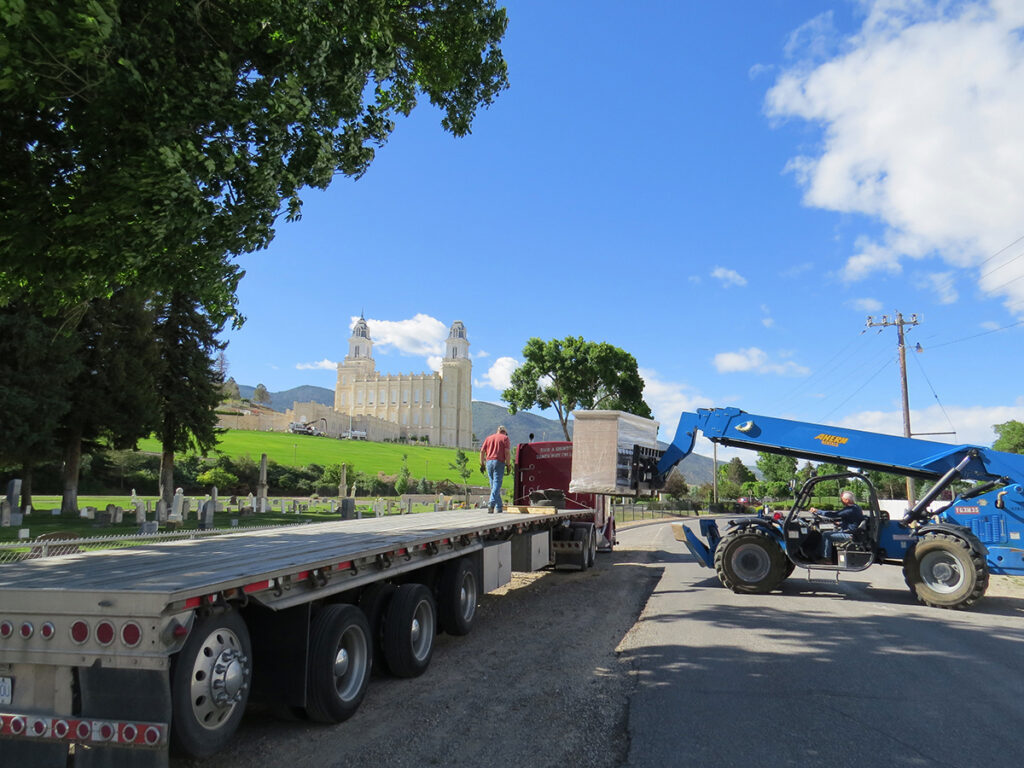
Telehandler unload
Real-World Installation Examples
These examples demonstrate why accurate site evaluation is essential during the planning phase.
- Long Reach Over Existing Graves: A crane reached over 200 ft to complete a columbarium garden installation without disturbing surrounding graves.
- Steep Hillside Placement: A high-capacity crane was required to lift multiple custom columbaria up a significant slope.
- Restricted Access Across Turf: A telehandler transported columbaria across sensitive ground conditions.
- Limited Gate Entry: Specialized equipment navigated through existing cemetery gates for precise columbarium placement.
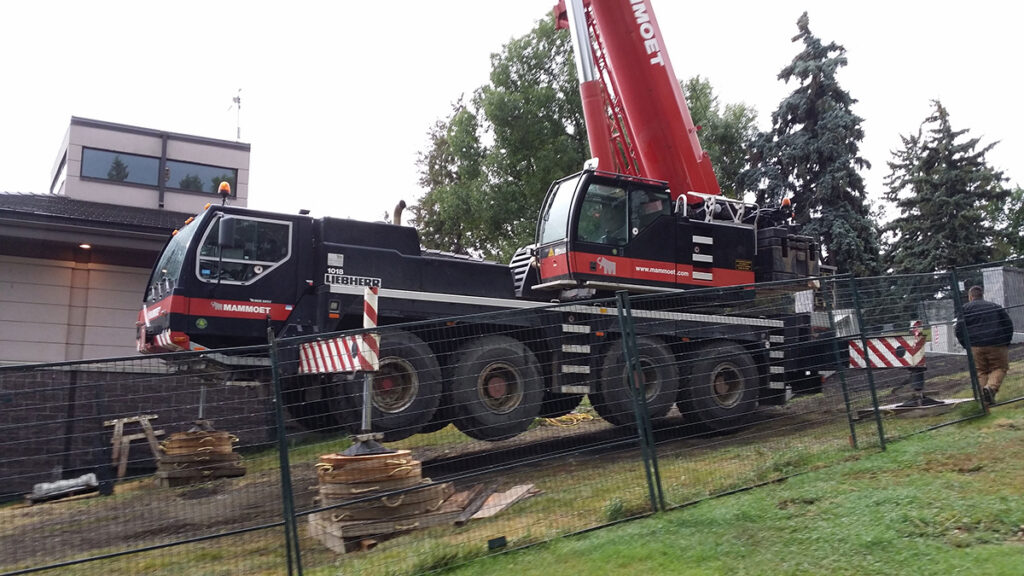
Crane reach from unlevelled ground to foundation.
Pro Tip: Early Evaluation Saves Money
Any size crane can complete a project — but the most cost-efficient installations are those that are carefully planned in advance. Providing photos, site drawings, and Google Maps measurements allows us to determine accurate reach distances and equipment needs early in the process. When there is any uncertainty, we recommend a crane site inspection to eliminate surprises and ensure installation day runs smoothly.
4. Design & Artistic Value
Cemetery Landscape Design
Creating Spaces That People Choose — and Revisit
A columbarium is not just a structure — it is a place of remembrance, reflection, and ongoing visitation. The difference between a columbarium that sells steadily and one that struggles is almost always rooted in columbarium garden design and landscaping.
Well-designed columbarium gardens feel intentional, peaceful, and connected to their surroundings. Poorly designed spaces feel cold, or overlooked. Families notice immediately.
Cemetery memorial planning is where art, landscape, and planning come together.

1. Connection to the Cemetery Setting
A columbarium should feel like a natural extension of the cemetery — not an addition.
When cemetery columbarium planning design aligns with the church or broader cemetery setting, the entire space feels cohesive, and intentional. When it doesn’t, a columbarium can feel disconnected.
2. Respect the Existing Landscape
Every cemetery has an established character — open lawns, mature trees, traditional monuments, or more contemporary layouts. The columbarium design should respond to that context, not compete with it.
- Align with existing pathways and circulation
- Preserve key sightlines and vistas
- Work with natural grades rather than against them
Design Insight:
The best placements feel obvious — as if the columbarium always belonged in that space.
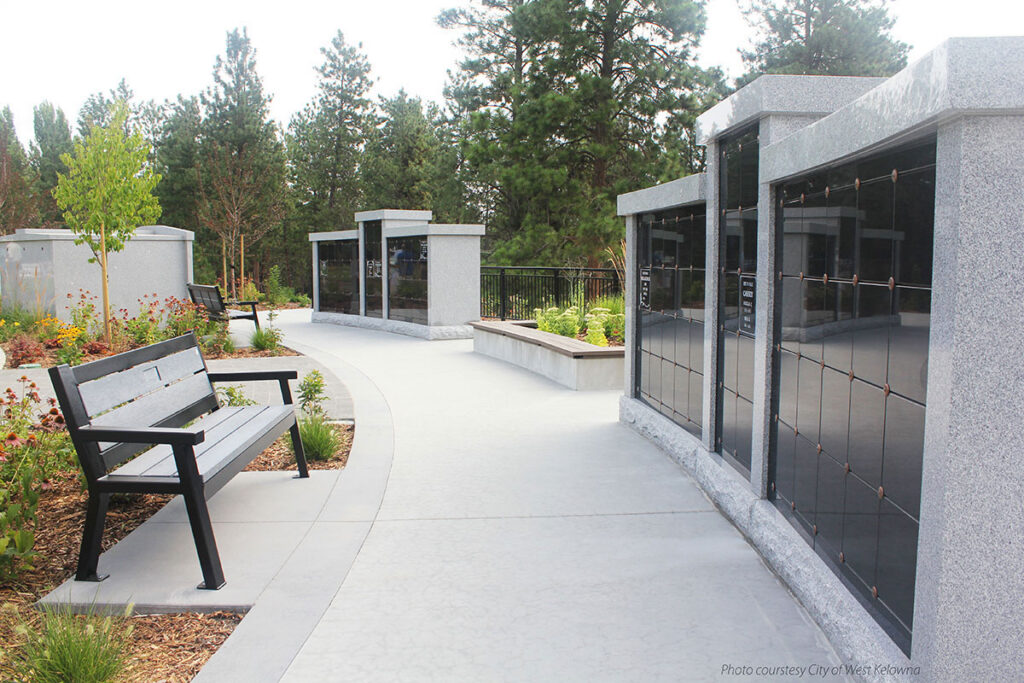
3. The Meaning and Power of Garden Scapes
A columbarium without a surrounding garden is just a structure. A columbarium within a thoughtfully designed landscape becomes a place of connection
Garden scapes provide:
- Emotional comfort
- A sense of peace and permanence
- A reason for families to linger, not just visit
Elements to consider:
- Pathways that guide movement naturally
- Accessibility for all
- Seating areas for reflection
- Trees for shade and seasonal change
- Plantings that soften granite and stone
But beyond aesthetics, gardens carry symbolism:
- Evergreens represent continuity
- Flowering plants reflect renewal
- Water features can suggest calm and reflection
Design Insight:
People don’t just purchase a niche — they choose a setting. A thoughtful columbarium cemetery landscape design can make a huge difference in visitor appeal. The garden is often what makes that decision feel right.
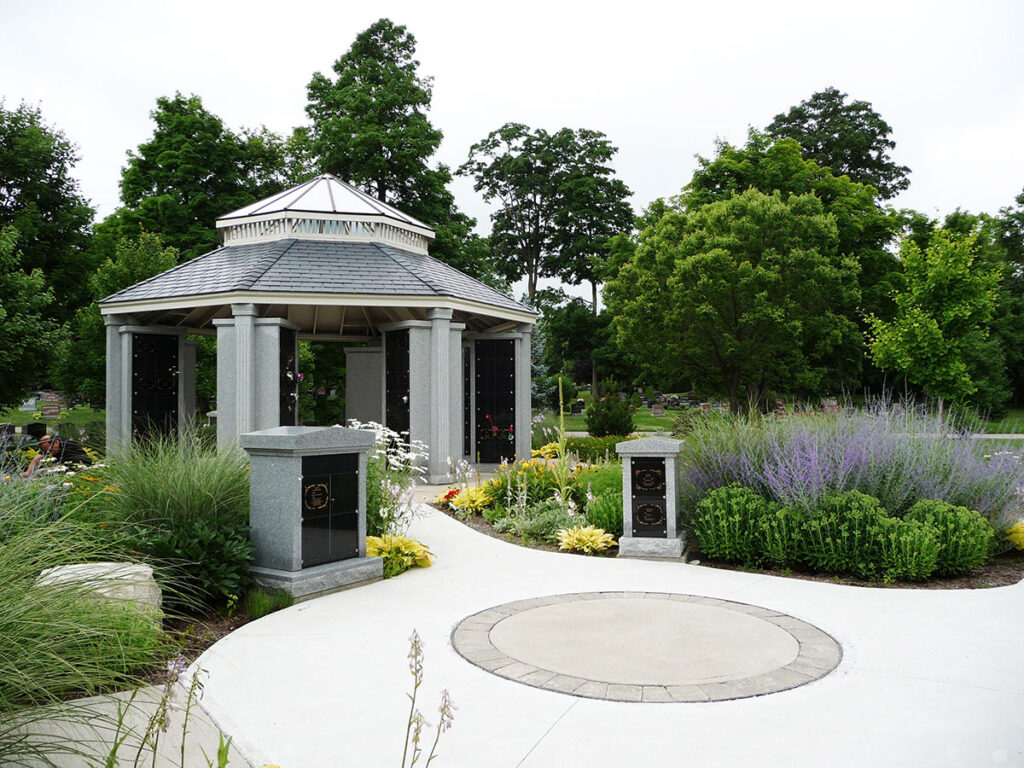
4. Harmony with Surrounding Architecture
A columbarium should feel like it belongs in its environment.
Design should reflect:
- Surrounding architecture
- Natural surroundings
- Existing materials (brick, stone, glass)
- Color Palettes
- Appropriate scale and proportion
When the columbarium complements its surrounding, the space feels cohesive — and more valuable.
Design Insight:
Consistency builds trust. When the design feels intentional, families feel more confident in their decision.
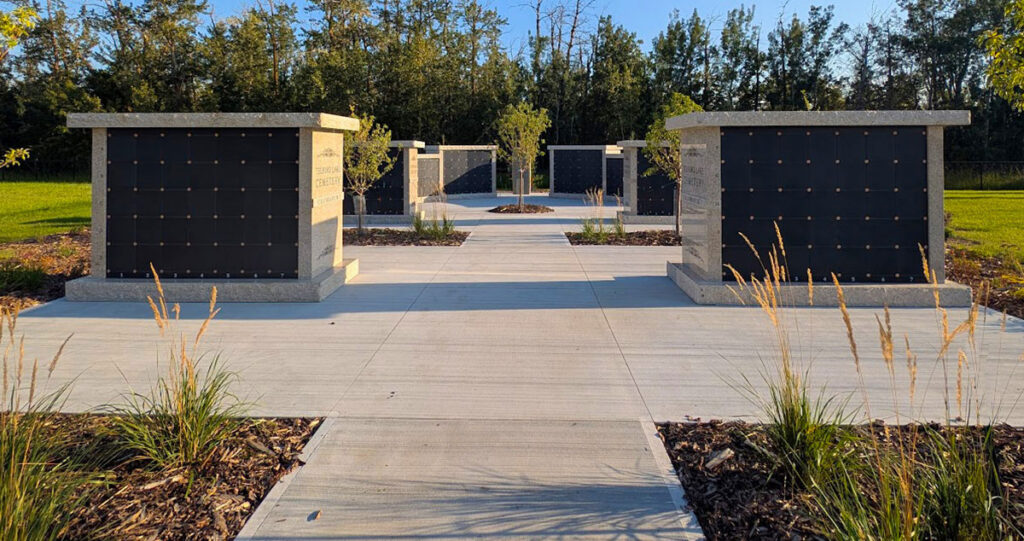
5. Designing for Long-Term Appeal
Columbaria are visited for generations. Design must age well, remain accessible, and allow for future expansion.
This means the design must:
- Age well
- Remain accessible
- Continue to feel valued and maintained over time
Avoid:
- Trend-driven design choices that may feel dated
- Overly tight layouts that limit movement
- Designs that ignore future expansion phases
Instead, focus on:
- Timeless materials
- Clear sight lines
- Flexible layouts that allow growth
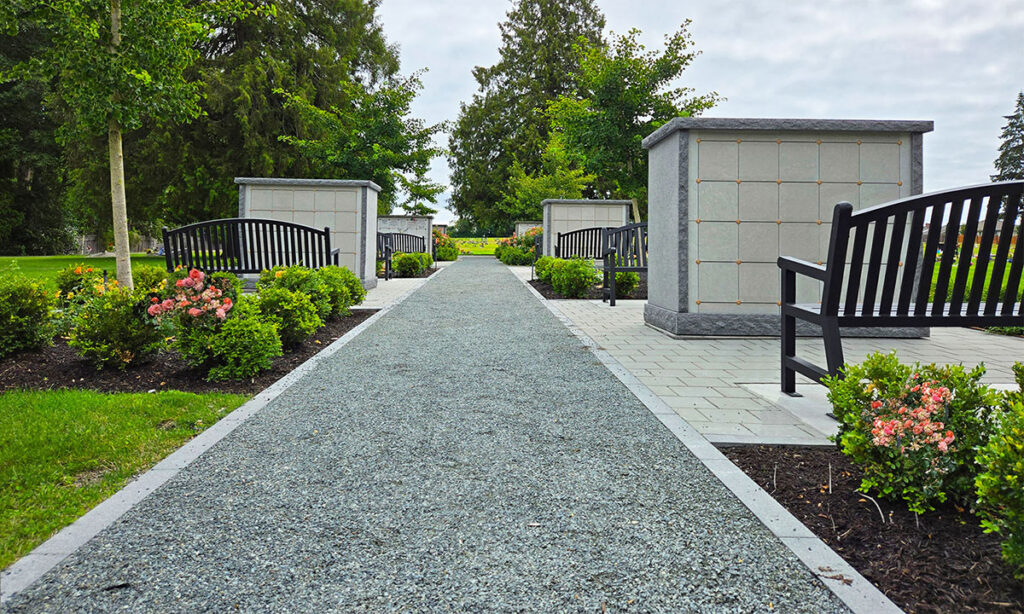
6. Designing with Intention
Bottom row niches are often harder to sell — but this is a design problem, not a pricing problem.
Benches Unlock Hidden Value. Benches should never feel like an afterthought. Their placement and design are critical:
- Position seating directly facing or slightly offset to the columbarium
Maintain appropriate distance for comfort
When sitting, the eye should naturally fall to the bottom row niches - Ensure clear, unobstructed access to the bottom row
- Also consider large gatherings and circulation
- Coordinate materials (stone, granite, wood, metal) with the columbarium and surrounding architecture
When integrated properly, the bench becomes part of the overall composition — not just an accessory.
7. Sunlight Matters More Than You Think
One of the most overlooked — yet critical — design factors is sunlight orientation.
Niches that receive natural light feel warm, visible, and inviting. Families are naturally drawn to spaces where light touches the face of the columbarium, creating a sense of presence and dignity.
North-facing niches consistently underperform.
They tend to feel:
- Colder
- Darker
- Less visited
- Less desirable during purchasing decisions
In contrast, south- and west-facing niches benefit from natural light throughout the day, especially during peak visiting hours.
Design Insight:
Position columbaria so that primary viewing faces receive sunlight during the times families are most likely to visit — late morning through early evening.
If a niche feels uninviting at first glance, it will be harder to sell — regardless of price or availability.
Design Insight:
Position columbaria so that primary viewing faces receive sunlight during the times families are most likely to visit — late morning through early evening. If a niche feels uninviting at first glance, it will be harder to sell — regardless of price or availability.
8. Create Natural Flow
A successful columbarium garden integrates seamlessly into how visitors already move through the cemetery.
- Position near existing roads or walking paths
- Avoid isolating the space or forcing awkward access
- Use landscaping to guide visitors naturally into the area
This encourages visitation and makes the space feel welcoming rather than separate.
9. Balance Presence and Respect
A columbarium should be visible enough to be found — but not so dominant that it overwhelms surrounding graves.
- Maintain appropriate scale relative to nearby monuments
- Use landscaping buffers where needed
- Avoid blocking or overshadowing existing family plots
Design Insight:
Good design respects what is already there while gently introducing something new.
Design Insight:
Good design respects what is already there while gently introducing something new.
10. Unify Materials and Tone
Consistency in materials and color helps tie the columbarium into the cemetery as a whole.
- Reflect existing stone types, tones, and textures
- Coordinate with older monuments or surrounding structures where possible
- Avoid sharp contrasts unless intentionally designed
- Incorporate landscape lighting if possible
This creates a sense of connection and continuity.
Pro Tip: Fit Over Flash
The most successful columbarium projects don’t stand out because they are different — they stand out because they fit perfectly.
When a columbarium is thoughtfully connected to its cemetery setting, it becomes part of the landscape, part of the history, and part of the visitor experience — not just another feature, but a natural place of remembrance.
Pro Tip: Fit Over Flash
The most successful columbarium projects don’t stand out because they are different — they stand out because they fit perfectly.
When a columbarium is thoughtfully connected to its cemetery setting, it becomes part of the landscape, part of the history, and part of the visitor experience — not just another feature, but a natural place of remembrance.
11. Psychological Impact on Buyers
Families don’t evaluate niches purely on height — they evaluate experience.
A cremation memorial garden that invites someone to sit, reflect, and connect:
- Feels more human
- Feels more respectful
- Feels more intentional
This subtle shift can significantly improve the desirability — and sales — of lower-level niches.
Design Insight:
People evaluate experience, not just height. When a visitor can sit comfortably and connect, perceived value increases significantly.
In columbarium design, small details often have the greatest impact.
A simple bench, thoughtfully placed, can turn a challenging inventory problem into a meaningful and desirable offering.
Pro Tip: Design Drives Demand
The most successful columbarium projects are not the cheapest — they are the most thoughtfully designed.
When you prioritize:
- Sunlight orientation
- Meaningful garden integration
- Architectural harmony
- Thoughtful seating
You create a space that families are naturally drawn to — and proud to choose.
A well-designed columbarium garden – creates a place people are drawn to, return to, and ultimately choose.
5. Foundation Preparation
Columbarium Foundation Requirements
A lasting columbarium begins beneath the surface.
Why Soil Testing Matters
Just like any permanent structure, a columbarium must sit on stable, properly prepared ground.
Skipping soil testing can lead to:
- Cracking
- Uneven settling
- Drainage issues
- Structural instability over time
History provides a cautionary example — the Leaning Tower of Pisa began leaning during construction due to unstable soil. While a columbarium is far smaller, the principle is the same: soil conditions determine structural success.
What Soil Testing Determines
Why Soil Testing Matters
Just like any permanent structure, a columbarium must sit on stable, properly prepared ground.
Skipping soil testing can lead to:
- Cracking
- Uneven settling
- Drainage issues
- Structural instability over time
History provides a cautionary example — the Leaning Tower of Pisa began leaning during construction due to unstable soil. While a columbarium is far smaller, the principle is the same: soil conditions determine structural success.
Plan with Confidence
Columbarium Planning Installation Made Easy
Foundation
When you:
- Use verified cremation data
- Build in phases
- Conduct soil testing
- Confirm foundation engineering
- Verify crane reach
- Schedule inspections
- You eliminate uncertainty.
Preparedness reduces anxiety — and protects your investment.
